For young learners, becoming proficient in their native language (the language a child learns, hears, or regularly uses in their home and local environment) is one of the most significant challenges they face. It’s significant because language learning lays the foundation for reading, writing, reasoning, and success in nearly every school subject.
However, language learning doesn’t need to be focused on just an individual’s primary language. As the world grows smaller through technology, travel, and increasingly interconnected economies, the ability to communicate across languages and cultures (i.e., bilingualism) becomes increasingly beneficial. Learning a second language helps prepare children to not only understand the wider world, but to participate more successfully in it.
While Adults can also be excellent second language learners, children do have some significant advantages. For example, one study (completed in 2018 by Hartshorne, Tenenbaum, and Pinker) involved a large number of participants and confirmed that: “Language learning remains strongest through childhood and early adolescence, and that second language learners who were able to reach native-like grammatical proficiency generally benefitted from beginning that second language study by around the age of 10.”
Other studies show similar results. The “age of 10” is significant because, in most school settings, that approximate age corresponds to when a child should be proficient enough in his or her native language to be able to transition from “learning to read” to “reading to learn.” This “reading to learn” phase is when bilingual instruction can be most effective.
Some additional advantages of bilingual learning include:
- Cognitive Benefits (better problem-solving skills, improved attention and focus, greater mental flexibility)
- Academic Benefits (improved reading and writing skills, better understanding of grammar, easier to understand additional languages)
- Communication Benefits (ability to communicate with more people, greater self-confidence, improved listening skills)
- Brain Development (obtaining a second language can strengthen the brain networks involved in: attention, working memory, decision-making, cognitive flexibility, and language processing)
- Career Benefits Later in Life (more job opportunities, higher learning potential, international opportunities)
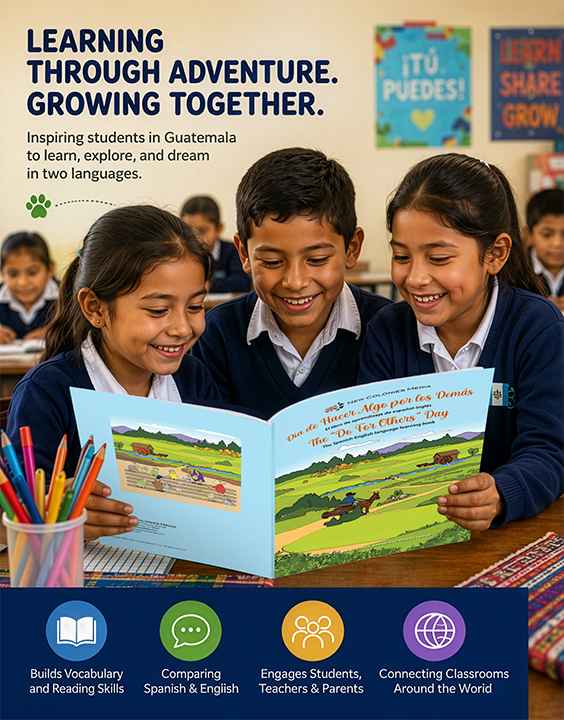
Given the above, “The Do For Others Day,” Spanish-to-English storybook highlighted on this website is designed for not only child bilingual language learning, but adult bilingual development as well. Matching colors visually connect corresponding Spanish and English words and phrases, allowing second-language learners to move easily between the two languages. This storybook also has a unique structural and cross-teaching symmetry that makes the learning process not only easier, but also more enjoyable since language learning is enhanced by a compelling storyline and wonderful characters.
This bilingual storybook represents the first of a planned series of similar books intended to complement and support the English language reading and writing “Critter Project” collection of activity books, color the storybooks, create your own storybooks, and full-version storybooks that are currently featured on “critteradventuretales.com.”
In summary, while gaining mastery of one’s given, primary language is an important key for a young learner’s future success…adding bilingual language skills goes even further in strengthening a child’s long-term ability to learn, communicate, and thrive in an increasingly interconnected world.